| Year | 1796 |
| Impact | Profound impact on the society of New Netherland |
| Nation | |
| Program | D.C.U.S.S. (Dimensional Compacted Universal Space Shuttle) |
| Purpose | Space exploration |
| Technology | 25th century advanced |
| Achievements | Important discoveries, pushed boundaries of human knowledge |
In the year 1796, the nation of New Netherland made a bold leap into the unknown with the creation of the D.C.U.S.S. (Dimensional Compacted Universal Space Shuttle) program. Driven by a desire to explore the cosmos and secure New Netherland's position as a technological superpower, this experimental space program aimed to take human spaceflight into uncharted territory.
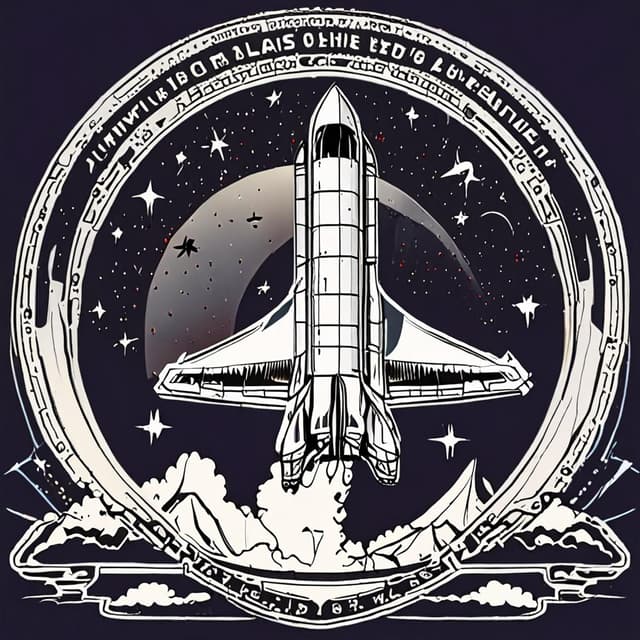
At the heart of the D.C.U.S.S. program was an advanced 25th century space shuttle design, capable of feats previously thought impossible. Powered by a revolutionary "dimensional compression" drive, the shuttle could achieve speeds far exceeding traditional chemical rockets. Its modular construction also allowed the craft to be easily reconfigured for a variety of scientific and exploratory missions.
The sleek, aerodynamic exterior of the D.C.U.S.S. shuttle concealed a wealth of cutting-edge technologies. Advanced life support systems, sophisticated sensor arrays, and state-of-the-art navigation computers enabled the crew to survive and navigate the rigors of deep space. Additionally, the shuttle was equipped with experimental "dimensional scanners" that could peer into previously inaccessible realms of the universe.
Crewed by some of New Netherland's most brilliant scientific minds, the D.C.U.S.S. program embarked on a series of bold voyages into the unknown. The shuttle's maiden flight in 1798 set a new record for the furthest human expedition into space, reaching the edge of the solar system. Subsequent missions ventured even deeper, making groundbreaking observations and discoveries.
Perhaps the program's most remarkable achievement was the 1802 expedition that successfully navigated a "dimensional rift", entering a parallel universe. The crew's detailed observations and measurements of this alien realm challenged long-held assumptions about the nature of reality itself. Other notable discoveries included the detection of previously unknown forms of dark matter, the mapping of complex gravitational anomalies, and the detection of extraterrestrial signals.
The D.C.U.S.S. program's dramatic successes captivated the public imagination, elevating New Netherland's prestige on the global stage. The nation's technological superiority was undeniable, sparking both awe and envy from rival powers. However, the program was not without its critics and controversies.
Some questioned the enormous costs of the program, arguing that the funds could be better spent addressing pressing social and economic issues. Others expressed concern over the ethical implications of the crew's dimensional explorations, fearing the potential consequences of interfering with parallel realities. There were also persistent rumors of technical issues, pilot fatigue, and even mysterious disappearances that cast a shadow over the program's achievements.
Despite these challenges, the D.C.U.S.S. program's legacy endures as a testament to the boundless potential of human curiosity and scientific exploration. The shuttle's voyages have forever altered our understanding of the cosmos and our place within it, paving the way for future generations to continue the quest to boldly go where no man has gone before.
